The ecosystem the field needs.
Unifying global data and expertise to integrate sex and gender differences into ADRD research — at a scale no single lab or funder can achieve alone.
The foundation
An integrated ADRD research ecosystem
The S|GN Consortium is building an integrated, sex- and gender-informed research ecosystem to systematically advance understanding of sex differences in Alzheimer’s and related diseases (ADRD).
We are uniting datasets focused on reproductive transitions with those focused on aging, cognitive decline, and relevant biomarkers. This approach will help us generate new data where critical gaps remain, and address questions that existing data cannot answer alone.
The work is unfolding in three sequential phases.
Our three-phased approach
Aggregation, harmonization, and analysis of existing data
Sex and gender data currently exists. S|GN is bringing that data together. Harmonizing sex and gender variables and aligning existing cohorts under a common framework will help us identify priority questions, surface gaps, and generate insights that siloed data cannot.
Targeted data generation and prospective collection
Harmonization helps reveal what we're missing. Where existing data cannot answer the question, S|GN aims to identify what new data must be generated and how. Targeted collection will fill the most consequential gaps.
Expanded cohort participation
The ecosystem will grow as more institutions, geographies, and researchers join. Each new cohort enables increasingly comprehensive and globally representative analyses.
The inaugural dataset
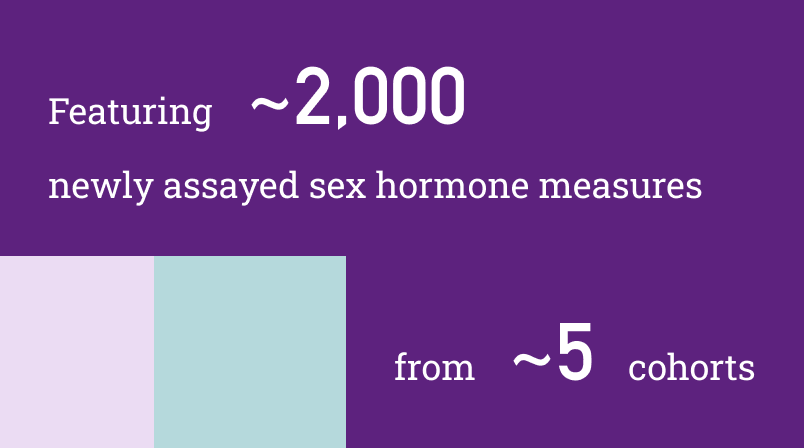
In 2026, S|GN is poised to generate the largest harmonized dataset of participants with sex-specific and cognitive measures to interrogate sex differences in ADRD.

Timeline
The dataset lifecycle
The inaugural dataset is currently in progress. Harmonization is set to finish by end of 2026, after which an embargo period begins for one year. In that year, consortium members get access to the dataset before it becomes available to the broader research community as a shared, global resource.
2026
- New cohort onboarding
- Sex hormone assays complete
- Data harmonization underway
- Embargo period begins
2027
- Working group analyses of sex-specific risk factors and biomarkers
- Mechanistic studies
- Cross-cohort publication program launches
- Embargo period ends
From data to action
Acting on insights through working groups
Working groups will help activate insights informed by the data. Working groups will help activate insights informed by the data. Initial group topics are informed by current research gaps, priority hypotheses to interrogate, and the expertise of our leadership.
Confirmed thematic areas include:
- Sex-disaggregated analyses of APOE
- Proteomics of sex-specific effects
- Recruitment, adherence, and retention of participants
Members will help inform the research direction and have a clear path to publication. As the needs arise, new working groups will be formed and any/all consortium members can join and participate.
The translational impact for ADRD research
An integrated ecosystem across studies and life course will enable the field to answer questions that our currently siloed system simply cannot.
Such efforts will support the development of sex-informed risk models, prevention strategies, and therapeutic approaches in ADRD.